This guide showcases top 3D printed model sets that help students visualize human anatomy and cellular structures. Each selection emphasizes hands-on exploration, tactile learning, and durable design for classrooms or home study. Explore options ranging from full body anatomy kits to compact organ models, all featuring accurate details and interactive features.
| Product | Type | Key Benefit |
|---|---|---|
| 3D Printed Plant and Animal Cell Models, Educational STEM Learning Kit | Cell models | Plant vs. animal cell comparison |
| 8 PCS Mini Human Body Model for Kids | Organ models | Compact, durable anatomy study |
| Human Anatomy Study Cube | Cube anatomy | 9 body parts in a 7x7x7 cm cube |
| Be Amazing! Toys Interactive Human Body | Full-body model | 60-piece interactive anatomy kit |
| Already Assembled T13 Action Figure Accessories | 3D printed action figure accessories | Fully articulated, customizable poses |
3D Printed Plant and Animal Cell Models, Educational STEM Learning Kit

These 3D printed models provide a tangible way to study cellular architecture. The kit includes both plant and animal cell models, enabling direct side-by-side comparisons of organelles and cell structure. The tactile format encourages active learning as students identify organelles and their roles in cellular processes. Ideal for classrooms, science fairs, or at-home STEM activities, the durable models promote long-term use and repeated examination.
Already Assembled T13 Action Figure Accessories

While framed as action figure accessories, this 3D printed kit showcases fully articulated joints and multiple weapon options for dynamic posing. The modular design supports customizations and varied display configurations, offering a hands-on example of how 3D printed parts can be assembled into flexible, poseable figures for educational demonstrations or creative projects.
8 PCS Mini Human Body Model for Kids

This set includes eight compact models representing major human organs, designed for easy storage and portability. Made from PVC, the pieces are durable and comfortable to touch, enabling repeat handling and interactive study of physiology. The models’ color and detail support quick recognition of anatomical features, making it suitable for classrooms and individual study alike.
Human Anatomy Study Cube
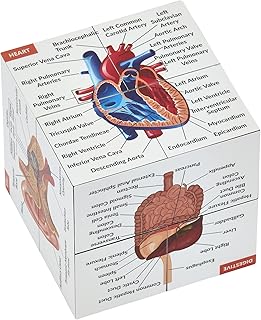
The 7x7x7 cm study cube packs nine body parts into a compact form, turning anatomy revision into a tactile puzzle. Fold-out panels reveal detailed information for each section, supporting quick review sessions and self-assessment. This cube serves as a portable, space-saving reference for students studying anatomy, biology, or nursing.
Be Amazing! Toys Interactive Human Body

This 14-inch fully poseable anatomy model includes bones, muscles, and organs, offering interactive, hands-on exploration of human anatomy. With removable parts and an adjustable stand, it supports demonstrations of movement, organ locations, and muscular layout. It is a practical tool for classrooms, clinics, or science-based play.
Buying Guide: Key Purchase Considerations
- Educational scope: Choose models that align with learning goals—cell biology, human anatomy, or interactive demonstrations. Multi-type kits offer broader coverage, while single-focus sets excel at depth.
- Size and portability: Consider classroom space and storage needs. Compact cubes and mini models are ideal for quick reviews, while full-body figures suit hands-on labs or demonstrations.
- Materials and durability: PVC and other plastics should withstand frequent handling. Check for smooth edges, snag-free joints, and compatibility with classroom cleaners if used in school settings.
- Detail and accuracy: Look for models that accurately reflect anatomy or cellular structures. High-detail visuals aid recognition and memory retention during study sessions.
- Interactivity: Fully articulated figures or removable parts enhance engagement and hands-on learning. Ensure parts fit securely to prevent loss during classroom use.
- Age and safety: Match models to the user’s age range and educational level. Some kits include small parts; supervise younger users to prevent choking hazards.
- Durability and value: Reusable models save money over time. Consider kits that come with helpful guides or labels to support independent study and teacher-led activities.
- Expansion potential: If you anticipate future needs, choose systems that allow additional components or replacement parts to be added later.
Across these options, 3D printed models provide tangible insight into anatomy and biology. They support diverse learning styles, from visual and kinesthetic to collaborative classroom activities. Whether used for basic anatomy review, detailed cellular study, or creative display, these models offer consistent, hands-on exploration that complements digital resources and textbooks.
Add a Comment