Finding timers that are kid-friendly, reliable, and easy to read helps children manage time during study, cooking, and activities. This guide highlights five top egg timers and kid-focused countdown timers that are engaging, durable, and simple to use. Each product supports visual cues, audible alerts, or both, making it easier for young learners to grasp time concepts. Read on to compare features and find the right timer for your child’s needs, whether at school, home, or during activities.
style=”display:none;”>Summary Table (Selected Products)
| Product | Brand | Key Feature | Format |
|---|---|---|---|
| Antonki 2 Pack Digital Timer for Kids | Antonki | Magnetic, Loud/Silent modes, memory recall | Digital |
| ELE DEPI 2 Pack Cute Kitchen Timer (Fox & Raccoon) | ELE DEPI | Mechanical, 60 minutes, kid-friendly animal design | Mechanical |
| LIORQUE Visual Timer for Kids | LIORQUE | Pause function, visual countdown, center knob | Visual |
| ELE DEPI 60 Minutes Mechanical Kitchen Timer (Dinosaur) | ELE DEPI | Battery-free wind-up, 60 minutes | Mechanical |
| 60 Minute Wind Up Timer (Colortrak) | Colortrak | One-minute increments, simple wind-up | Mechanical |
Antonki 2 Pack Digital Timer For Kids

The Antonki digital timer blends straightforward operation with kid-friendly features that support classroom and home use. It offers Count Up and Countdown modes, a large high-contrast display, and clearly marked buttons that help children learn to start and stop timing independently. A loud alarm ensures audible notification even in busy rooms, while a silent mode provides a gentle reminder through a red LED, useful for quiet study or napping periods. The timer supports a maximum count of 99 minutes 59 seconds and includes a built-in memory to avoid repeated resetting. A long-press shortcut accelerates setup, making it a practical tool for time management activities.
ELE DEPI Cute Kitchen Timer (Fox & Raccoon)

This 60-minute mechanical timer from ELE DEPI is built without batteries, prioritizing simplicity and durability—ideal for kids learning time concepts. The animal-themed design makes the timer visually appealing to children, turning timekeeping into a fun activity. To set the timer, rotate clockwise to 55 minutes and then counterclockwise to the desired time, after which the bell signals time’s up. Its sturdy construction uses metal and PVC with polished finishes to avoid sharp edges, supporting use in kitchens, classrooms, or reading sessions. It’s a reliable, low-maintenance option for basic countdown needs.
ELE DEPI 60 Minutes Mechanical Timer (Dinosaur)
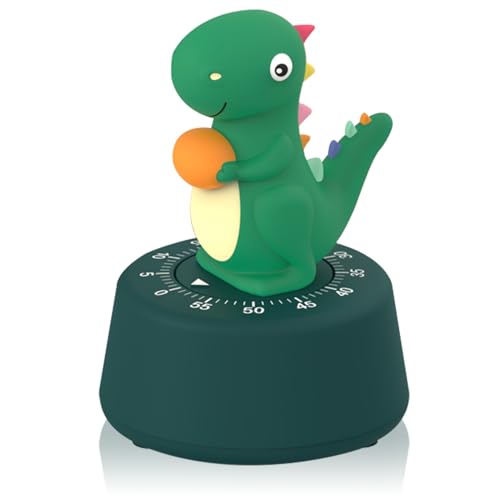
The ELE DEPI Dinosaur timer combines a playful design with a robust wind-up mechanism. No batteries are required, making it a practical educational tool for classrooms and homes. This 60-minute timer features a kid-friendly dinosaur motif that helps children associate time with daily routines like cooking, reading, or exercise. The timer’s metal and PVC construction is designed for durability in active environments, with gentle edges and a simple turning action that teaches children how to manage intervals without relying on digital screens.
60 Minute Wind Up Timer (Colortrak)
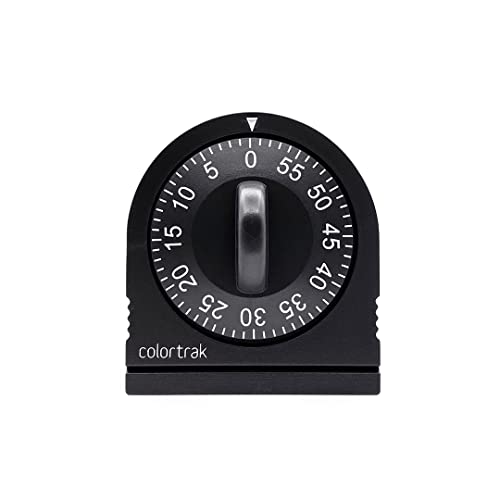
Colortrak’s 60 Minute Wind Up Timer is a compact, easy-to-use option with one-minute increment settings up to one hour. It’s designed for use in salons, classrooms, and homes where precise timing matters in processes like hair color development, cooking, or kid-focused activities. The wind-up mechanism is simple: turn clockwise to the target time and the bell will ring when done. Its discrete footprint allows it to sit on counters with minimal clutter, making it suitable for busy spaces that require quick time marks without a screen or digital prompts.
Buying Guide: Key Purchase Considerations And Comparisons
- Type and format: Digital timers offer precise minute-by-minute display and memory features, while mechanical timers use wind-up action and offer battery-free operation. For kids learning to read time, visual timers and animal-themed designs can boost engagement.
- Audible vs. visual cues: If you need a timer that can be heard in another room, choose a model with a loud alarm. For quiet environments, prefer a timer with a red indicator light or silent mode.
- Ease of use: Timers with a large display, clearly marked buttons, and a simple setup process help kids build independent time management skills. A pause function or quick-start features can improve classroom efficiency.
- Durability and materials: Look for timers made from kid-friendly materials with rounded edges and sturdy construction. Mechanical timers are battery-free and low-maintenance, while digital timers may require straightforward battery replacements.
- Size and portability: Consider the timer’s footprint and whether it needs magnetic placement, stand-alone use, or tabletop positioning for desks or kitchen counters.
- Design appeal: Animal and dinosaur motifs or bright colors can motivate children to interact with timekeeping activities, turning routines into fun learning moments.
- Versatility: A timer that supports cooking, reading, study sessions, and classroom activities offers greater value for families and teachers managing multiple tasks.
In summary, parents and educators can choose between digital and mechanical timers based on the child’s preferences for visuals, sound, and ease of use. For learning goals that combine classroom practice with home routines, a timer that offers both audible alerts and visual signals, plus durable construction, tends to deliver the most consistent results across diverse activities.
Add a Comment