Many parents look for engaging, safe, and educational toys that promote fine motor skills, problem solving, and early cognitive development. The following five play cubes are selected for their versatility, durability, and kid-friendly designs. Each product offers multi-sensory activities—perfect for busy hands and curious minds. Below is a quick overview table, followed by in-depth sections for each cube.
| Product | Brand | Key Feature |
|---|---|---|
| Back2School Express Peek ‘n’ See Play Cube | Back2School Express | Large sensory mirrors and open-ended play space |
| ROBOTIME 13-in-1 Wooden Activity Cube | ROBOTIME | Multiple Montessori-style activities in one cube |
| Play22 Wooden Activity Cube | Play22 | 5-plus activities including bead maze and shape sorter |
| WOODMAM 9-in-1 Farm-Themed Wooden Play Center | WOODMAM | Farm-themed adventures with magnetic train cars |
| Tiny Land 9-in-1 Wooden Activity Cube | Tiny Land | Nine sides with varied play features for screen-free learning |
Note: All products are designed for early learners and emphasize safe, durable construction with splash-free, child-friendly finishes. This article presents objective features to help caregivers compare options for babies and toddlers starting from roughly 12 months old.
Back2School Express Peek ‘n’ See Play Cube
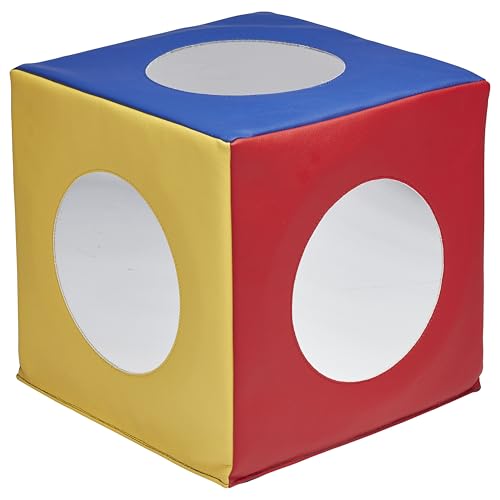
The Back2School Express Peek ‘n’ See Play Cube centers on a large foam cube covered with a latex-free faux-leather surface. It features five sensory mirrors that invite hands-on exploration, self-recognition, and creative peek-a-boo play. The design is built for durability with a reinforced woven backing and strong seams, making it suitable for daily use at home or daycare. This cube supports open-ended play, encouraging babies to express emotions and explore facial expressions as they interact with peers or caregivers.
ROBOTIME 13-in-1 Wooden Activity Cube

This wooden activity cube offers 13 different activities in one compact unit. Features include shape sorting, bead mazes, spinning gears, and more. The cube is crafted from high-quality wood with smooth edges to ensure safety for babies and toddlers. Its sturdy construction is designed to withstand hours of hands-on exploration, while encouraging problem-solving, hand-eye coordination, and fine motor skills. It aligns well with Montessori-inspired learning principles by promoting independent play and exploration.]
Play22 Wooden Activity Cube

Play22’s Wooden Activity Cube combines five core activities into a single wooden frame. It includes a bead maze on top, a shape sorter, abacus-style counting beads, sliding shapes, and more. The design emphasizes tactile learning and color/shape recognition, supporting fine motor development and early problem solving. The compact footprint makes it suitable for small play areas, and each side offers a distinct tactile experience to keep toddlers engaged from exploring shapes to counting basics.
WOODMAM 9-in-1 Farm-Themed Wooden Play Center

The WOODMAM 9-in-1 Farm-Themed Wooden Play Center provides a diverse set of activities across a farm motif. With games like shape matching, abacus counting, zigzag paths, and a peek-a-boo farm animals feature, this cube supports color and number recognition, alongside hand-eye coordination. An additional magnetic train set on the track adds a dynamic element to imaginative play. The dual-purpose design allows use as a storage box by flipping the lid, aiding in organization after playtime.
Tiny Land 9-in-1 Wooden Activity Cube

Tiny Land’s 9-in-1 wooden activity cube is a versatile center designed for 1-year-olds and up. It includes features such as a xylophone, bead maze, shape sorter, mirror, spinning gears, and doors/windows. Each side offers a unique play experience to keep toddlers curious and screen-free. The exposed, solid-wood construction and non-toxic finishes emphasize safety and durability, while the range of activities supports fine motor skills, shape and color recognition, and early problem solving.
Buying Guide: Key Considerations When Choosing a Baby Activity Cube
Choosing the right baby activity cube involves balancing safety, durability, and developmental value. Consider the child’s age, interests, and the play environments where the cube will be used most often. Below are core factors and comparisons to help inform your decision.
- Safety and materials: Look for non-toxic finishes, smooth edges, and sturdy construction. Wood and high-density foam with reinforced seams are common choices. Ensure there are no small detachable parts that pose choking hazards for younger babies.
- Number and variety of activities: More sides with varied activities promote longer engagement and broader skill development. Montessori-inspired designs often emphasize problem solving and fine motor control.
- Durability and weight: Durable materials support everyday use in homes and daycare centers. Check for reinforced backings, strong seams, and stable bases to prevent tipping during play.
- Size and storage: Consider the cube’s dimensions and whether it can fit your space. Some models include a lid that converts into storage, which can help with cleanup and organization.
- Cleanability and maintenance: Non-porous surfaces and easy-to-clean fabrics or finishes simplify maintenance, especially for toys used by multiple children.
- Educational value: Assess how the cube supports cognitive skills like counting, color and shape recognition, and early literacy through interactive features such as mirrors and beaded mazes.
- Portability and setup: Some cubes are heavier or bulkier. If you travel or rearrange rooms, a lighter model or modular design may be advantageous.
For caregivers prioritizing Montessori-inspired play, look for cubes that encourage independent problem-solving with hands-on activities like sorting, matching, and sequencing. If the goal is sensory development, choose cubes with mirrors, bead mazes, and textured surfaces. Always align product selections with the child’s current developmental stage and safety needs, particularly for babies younger than two years old.
Add a Comment