Choosing the right motor and remote control components is essential for building reliable RC cars, STEM experiments, and DIY projects. This guide showcases five practical motors and related kits that cover a range of voltages, speeds, and applications—from micro motors for compact builds to high-speed units for hobby RC cars, plus solar-powered options for educational projects.
Overview of chosen products:
- 6 Pack DC 1.5-3V 15000RPM Mini Electric 130 Motors Kit (6 pcs with mounts)
- uxcell Micro Motor DC 12V 11600-12000RPM High Speed Motor
- CHANCS Electric Motor 380 DC Motor 7.4V 25000RPM
- MaxTronic Amphibious Remote Control Car
- Solar-Powered Car V1, Wooden STEM Kit
| Product | Key Feature | Ideal For |
|---|---|---|
| 6 Pack DC 130 Motors | High RPM, multiple motors with mounts | DIY RC cars, STEM projects |
| uxcell Micro Motor | 12V, 11,600–12,000 RPM | DIY RC cars, gadgets |
| CHANCS 380 Motor | 7.4V, up to 25,000 RPM | High-speed builds, hobby toys |
| MaxTronic Amphibious Car | Waterproof, USB-C charging, LEDs | All-terrain indoor/outdoor play |
| Solar-Powered Car V1 | Solar + battery power, wireless remote | Renewable energy STEM learning |
6 Pack DC 130 Motors Kit For DIY RC Cars
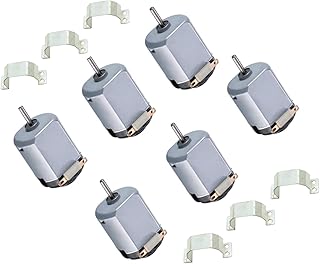
The 6 Pack DC 1.5-3V 15000RPM Mini Electric 130 Motors Kit includes six small DC motors and metal mounts, designed for quick, compact builds and projects. Each motor is rated for DC operation from 0.5 to 3V with a high no-load speed around 15000 RPM. The kit ships with anti-static packaging to protect motor components for long-term storage. Applications span Arduino projects, automotive electronics, and STEM experiments. Expect multiple-hour operation when powered by fresh AA batteries, depending on load and battery type.
uxcell Micro Motor DC 12V 11600-12000RPM High Speed Motor

This micro motor from uxcell operates at 12V and delivers a no-load speed of roughly 11,600–12,000 RPM. The motor measures about 52.6mm by 24mm, making it suitable for compact DIY RC cars, massage devices, game controllers, and other small electronics projects. It provides a versatile option for high-speed needs in tight spaces, with typical uses in hobby electronics and rapid prototyping.
CHANCS Electric Motor 380 DC Motor 7.4V 25000RPM

The CHANCS 380 motor is rated for 7.4V with a starting current around 5A and running current near 1A. It supports a voltage range of 3.7–7.4V and features a compact body with dimensions around 28mm by 38mm, including a 13 x 2.3mm shaft. It offers high speed and torque suitable for DIY hobby toy cars and small tools. For reliable startup, a suitable power source within the specified range is recommended.
MaxTronic Amphibious Remote Control Car

This 4WD amphibious RC car is designed for water-friendly play and all-terrain use. It features an IP-rated waterproof design to handle water surfaces and a built-in 3.7V 600mAh lithium battery, charged via USB-C. The car includes LED lights and a protective cage for 360° flips and stunts. It is a robust option for kids aged 3–12, offering durable construction for both indoor and outdoor adventures and practical charging convenience.
Solar-Powered Car V1 STEM Kit

The Solar-Powered Car V1 is a wooden STEM kit that blends solar power with battery backup, giving learners a hands-on experience in renewable energy and electronics. The kit includes a wireless remote control to operate the vehicle from a distance, encouraging exploration of solar charging, circuit design, and mechanical systems. This educational toy supports kids aged 8–12 in understanding how solar energy converts to motion and how remote control systems work in practice.
Buying Guide: Key Purchase Considerations
- Voltage and speed compatibility: Match motor voltage (3V–12V typical ranges) with your controller, battery, and project demands. Higher RPM motors deliver speed but may require stronger power management and heat control.
- Size and mounting: Check motor dimensions and shaft size to ensure it fits your chassis and gears. Some kits include mounting hardware, simplifying integration.
- Durability and load: For stunts and off-road use, choose motors and housings designed for higher torque and robust construction. Waterproof or weather-resistant options are beneficial for outdoor use.
- Power source and efficiency: Lithium-powered options (USB-C charging, solar) offer longer runtimes and easier recharging. Consider energy efficiency and shutdown features in devices like amphibious cars.
- Educational value: For STEM projects, solar and hybrid kits provide hands-on learning about energy conversion, circuitry, and remote control systems, enriching classroom or at-home experiments.
- Safety and compatibility: Ensure motor ratings align with battery voltage to prevent overcurrent. Verify wiring, connectors, and mounting hardware are suitable for your build.
- Noise, heat, and longevity: High-speed motors can generate heat and noise; plan for heat dissipation, ventilation, and possible heat sinks in compact builds.
Add a Comment